Personal Branding Strategy: How to Build a Strong Personal Brand
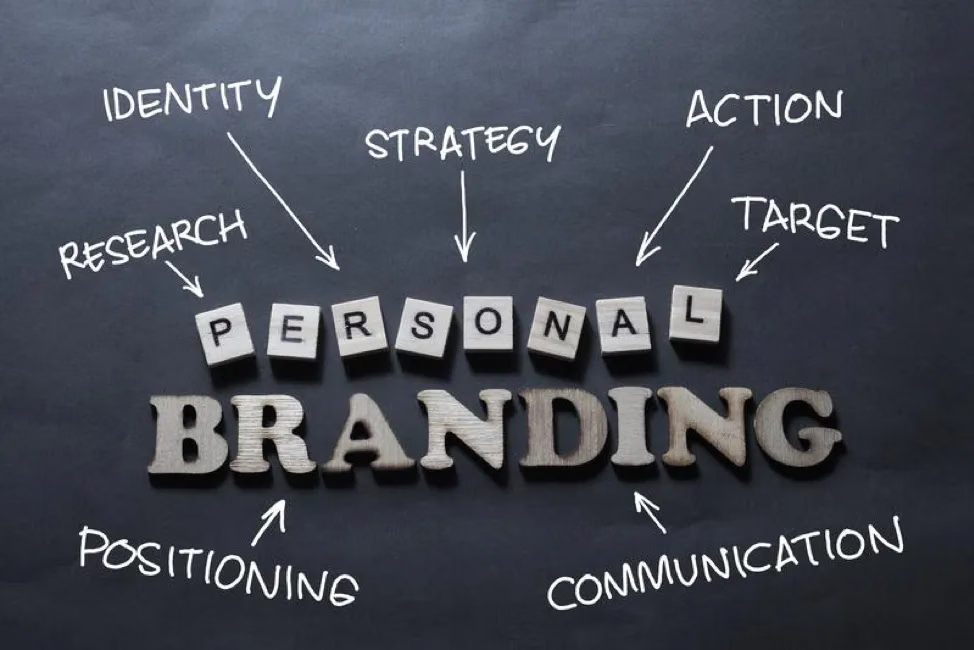
A personal branding strategy begins with one simple question: What do you want the right people to remember you for? Personal branding is not about posting on LinkedIn, growing followers or trying to be seen everywhere. It is consistently connecting your knowledge, experience, values, personality and proof to a clear professional identity.
The goal is not fame. The goal is recognition, relevance and trust among the people who matter most. If you are just starting out our guide on how to build a brand online explains the full process of creating your digital presence. What Is a Personal Branding Strategy? A personal branding strategy is the system behind your identity. It connects: What you know What you have experienced What you believe Who you want to reach What you want to be known for What you publish Where you publish How you distribute it What proof you can share What result you want your visibility to create Without a strategy personal branding becomes random. One day you talk about business. The day you share motivation. Then you comment on AI, productivity, leadership or whatever is trending. Each post might get some attention. People never form a clear idea about who you are. A strategy builds that connection. 1. Decide What You Want to Be Known For Ask yourself: If someone mentions my name in three years what will they think of me? “I want to be known for business” is too wide. “I help B2B founders build distribution systems through content” is much clearer. Your expertise does not need to be very narrow.. It needs to be specific enough that people know why your point of view matters. 2. Define Your Audience A personal brand is not built for everyone. Identify the people important to your goals: Founders CEOs Executives Consultants Investors Creators Professionals Potential clients Industry peers Then learn: What problems do they face? What are they trying to achieve? What already know? What mistakes do they make? What information do they need? What would make them trust you? A founder speaking to founders will communicate differently than a consultant targeting enterprise leaders. 3. Build Your Personal Brand Positioning Personal brand positioning is the bridge between who you're how others see you. A simple framework goes like this: Who are you? → Who do you help? → What do you know? → What perspective do you bring? For example: I help B2B founders turn their expertise into content and distribution systems that build authority and create business opportunities. Compare that with: “I am a marketing expert.” The first creates a position. The second only names a category. Your positioning should reflect experience. Your results, failures, research, customers, projects and lessons can all become part of your differentiation. Do not pretend to be an expert in something you cannot prove. 4. Develop a Point of View Expertise tells people what you know. A point of view tells them how you think. Two people can have knowledge but completely different personal brands because they interpret the same topic in different ways. Of saying: “Content marketing is important.” A stronger perspective might be: “Most companies don’t have a content problem. They have a positioning and distribution problem.” A point of view can come from your experience, customer conversations failed experiments, industry patterns or strong beliefs. You don’t need to say things. Just give your take. 5. Use the 2-3 Word Personal Brand Framework One of the useful tools we found in personal branding is reducing your core identity to two or three words. Start with a Shadow Audit . Ask yourself: What contradiction has shaped me? What insecurity have I struggled with? What behavior did I try to hide? What transformation have I gone through? Then find a trigger and add a transformer word that changes how the trait is understood. For example: "Proud People Pleaser" becomes memorable because it shows tension, curiosity and a story. This is not about faking vulnerability. It’s about finding a human element that adds depth to your professional identity. 6. Build Your Brand Journey A good strategic framework is: Desired Outcome → Known For → Do → Learn Start with where you want to go. Then decide what you want to be known for. Then list what you actually do to build that reputation. Finally document what you keep learning. This keeps your branding linked to your real career or business. 7. Build Content Around Five Pillars Your personal brand content comes from five areas: Expertise: Teach frameworks, strategies, analysis, processes and lessons. Experience: Share what you’ve actually done, including failures and decisions. Opinion: Explain how you interpret industry trends, problems or opportunities. Proof: Show results, case studies, research, experiments and evidence. Personal Context: Show the person behind the expertise without sharing details. The strongest content usually combines than one of these. 8. Use Storytelling of Constant Advice A powerful brand story follows three parts: Catalyst → Core Truth → Proof Start with what happened. Then explain what changed in your thinking. Then show why that lesson matters with experience or evidence. This creates impact than simply saying: “Here are five things you should do.” Your experiences become valuable when you can turn them into lessons. A simple structure works well: Situation → Problem → Decision → Result → Lesson This is especially helpful for founders and executives because their daily choices naturally create content ideas. 9. Build a Personal Brand Content Strategy Your content strategy should answer: What will I talk about? Who am I creating for? Which platforms matter? Which formats fit my strengths? How will I distribute content? How will I measure results? Don’t start with: “How posts should I publish?” Start with: “What association am I trying to build?” Consistency matters.. Posting every day doesn’t create authority. Three relevant pieces of content can be more effective than seven posts that go nowhere. 10. Choose Platforms Based on Your Audience You do not need to be on every platform. LinkedIn Personal Branding LinkedIn works well for founders, executives, consultants, B2B professionals and experts. Content includes: Founder stories Industry analysis Experiences Opinions Case studies Original research Lessons learned YouTube YouTube works best when your expertise benefits from video demonstrations, interviews, explanations or long-form storytelling. Instagram Instagram works when visual storytelling, short videos, education or creator-led communication fits your audience. The rule is simple: Platform choice should follow your strategy, not trends. 11. Build Thought Leadership Through Information Gain Thought leadership is not about having opinions. It’s about substance. Useful thought leadership comes from: Original research Industry analysis Frameworks Case studies First-hand experience Documented experiments Unique observations Interpretations of old problems Instead of another "10 marketing trends" article, imagine sharing an analysis based on patterns you saw across dozens of campaigns. That gives people something they can’t get from summaries. 12. Share the Knowledge Sell the Execution One of the principles we found is this: Share the knowledge sell the execution. Give people information freely. Your expertise builds trust. Your ability to implement becomes the product. For example a consultant can explain how a process works while selling the customization, research or ongoing support. This creates a link between content and money than turning every post into a sales pitch. 13. Build a Distribution System Content does not automatically reach the right people. A strong distribution model turns one core idea into formats: Long-form idea → Podcast/video → Short clips → LinkedIn post → Carousel → Newsletter This is sometimes called a waterfall distribution system. The key is not copying the content everywhere. Each platform should get a version that fits its style. The goal is to make one strong idea travel 14. Use the Accordion Method A way to think about content creation is the Accordion Method. At the beginning create a lot of content to test what your audience responds to. As you discover which topics, formats and angles work best reduce volume and focus on higher-quality output. In short: Test broadly → Find winners → Compress → Produce better This is smarter, than assuming you know what your audience wants before gathering data. 15. Measure Personal Brand Growth Properly Do not judge your brand by follower count or views. A useful measurement system looks at: Visibility Impressions Profile views Search appearances Website visits Engagement Comments Shares Saves Messages Meaningful conversations Business Outcomes Qualified leads Sales conversations Partnerships Speaking opportunities Client enquiries The research framework also suggests using a 75-90 day median instead of an average that gets skewed by viral posts. This way new content can be assessed after a reporting window rather than being judged too soon. The key question to ask is: Is the content becoming more relevant to the people I want to influence? 16. Personal Branding for Founders and CEOs Founders already have an advantage when it comes to content. They have: Decisions they've made Customers they’ve worked with Failures they’ve experienced Hiring stories Lessons from building a product Insights about the market Leadership challenges Business experiments Personal branding for founders should not turn into an ad campaign for their company. Instead the founder can become a voice in their specific category. For CEOs and executives the content needs to mix expertise, leadership views, industry knowledge, company background, professional history and personal insight. The goal isn’t to turn every executive into a media influencer. It’s to make their expertise easy to find. Their perspective recognizable. 17. Build the Content Operation, Not the Content Once a personal brand starts growing execution becomes a challenge. A helpful team framework is the 4 Rs: Role → Responsibilities → Requirements → Results Everyone on the team should know what they own what quality level's expected what tools or support they need and what outcome they're responsible for. This matters especially when a founder works with writers, editors, designers, strategists or distribution experts. The founder stays the source of expertise and point of view. The team builds the system around that foundation. 18. Avoid These Personal Branding Mistakes Trying to Be Focus first on one or two platforms where your audience actually spends time. Copying Creators Study people who are succeeding but build your positioning based on your own journey. Posting Without Positioning Random content makes it hard for people to remember you or connect your name to a topic. Chasing Every Trend Use trends only if they naturally fit your area of expertise. Focusing on Followers A small group of highly relevant followers often does more good than a large audience that doesn’t care. Manufacturing Vulnerability Authenticity doesn't mean sharing every struggle. Vulnerability should be honest and intentional. When Should You Consider a Personal Branding Agency? You can build your brand alone if you have the time and skills to handle strategy, research, writing, production, publishing, distribution and analytics. For founders and executives the problem is usually not lack of knowledge. It’s lack of capacity to execute consistently. A personal branding agency helps when you need help with positioning, content planning, LinkedIn content, writing, video, design, distribution, thought leadership, analytics and managing the workflow. The right agency shouldn’t just push out content. It should turn your expertise into a system: packaged produced, shared tracked and improved over time. If you’re looking for support you can check GrowItBuddy’s personal branding services . Personal Branding Is Not Personal Fame You don’t need millions of followers to have a personal brand. Even a specialist with a focused audience can have serious influence. The goal is: Relevance → Recognition → Trust Not fame for its sake. A strong personal brand grows when people start linking your name to a kind of expertise, opinion and proof. How to Know Your Personal Brand Is Working The strongest signs are often not numbers: they’re conversations. People may start saying: “I saw your post about this.” “You're the person who talks about X right?” “I’ve been following your work for a while.” You might also see: Relevant messages coming in Better introductions More qualified inquiries Speaking invitations Partnership opportunities More people sharing your ideas Business leads connected to your expertise That’s the compounding effect of personal branding. Frequently Asked Questions What is a branding strategy? It's a plan that answers: What do you want to be known for? Who do you want to reach? What will you say?. How will you earn trust in your field? How do I create a branding strategy? Start by defining your goal, target audience, core positioning, point of view content pillars, platforms, content distribution system, proof points and measurement steps. How content pillars should I have? Three to five focused pillars are easier to manage than trying to cover dozens of topics. Is LinkedIn good for branding? Yes, for founders, executives, consultants, B2B professionals and experts whose audience is career-focused. Does personal branding require media? No. Websites, articles, newsletters, podcasts, interviews, communities and speaking events all contribute. How long does personal branding take? There’s no fixed timeline. A single post might get attention fast. Building a lasting reputation takes consistent effort over months or years. Final Thoughts A personal branding strategy is not a content calendar. It’s the system that connects: Positioning → Point of View → Content → Story → Distribution → Proof → Measurement The strongest personal brands come from things: real expertise, real experience, real opinions and real work. You don’t need to invent a persona. You need to make your existing knowledge easier for the right people to find, understand, remember and trust. If you want to see how this strategy works in practice explore GrowItBuddy’s personal branding services and our work and portfolio . If you're specifically researching the Delhi market you can also read our guide to branding agencies in Delhi .
What Is a Personal Branding Strategy?
It connects: What you know What you have experienced What you believe Who you want to reach What you want to be known for What you publish Where you publish How you distribute it What proof you can share What result you want your visibility to create Without a strategy personal branding becomes random. One day you talk about business. The day you share motivation. Then you comment on AI, productivity, leadership or whatever is trending. Each post might get some attention. People never form a clear idea about who you are. A strategy builds that connection.
1. Decide What You Want to Be Known For
Ask yourself: If someone mentions my name in three years what will they think of me? “I want to be known for business” is too wide. “I help B2B founders build distribution systems through content” is much clearer. Your expertise does not need to be very narrow.. It needs to be specific enough that people know why your point of view matters.
2. Define Your Audience
A personal brand is not built for everyone. Identify the people important to your goals: Founders CEOs Executives Consultants Investors Creators Professionals Potential clients Industry peers Then learn: What problems do they face? What are they trying to achieve? What already know? What mistakes do they make? What information do they need? What would make them trust you? A founder speaking to founders will communicate differently than a consultant targeting enterprise leaders.
3. Build Your Personal Brand Positioning
Personal brand positioning is the bridge between who you're how others see you. A simple framework goes like this: Who are you? → Who do you help? → What do you know? → What perspective do you bring? For example: I help B2B founders turn their expertise into content and distribution systems that build authority and create business opportunities. Compare that with: “I am a marketing expert.” The first creates a position. The second only names a category. Your positioning should reflect experience. Your results, failures, research, customers, projects and lessons can all become part of your differentiation. Do not pretend to be an expert in something you cannot prove.
4. Develop a Point of View
Expertise tells people what you know. A point of view tells them how you think. Two people can have knowledge but completely different personal brands because they interpret the same topic in different ways. Of saying: “Content marketing is important.” A stronger perspective might be: “Most companies don’t have a content problem. They have a positioning and distribution problem.” A point of view can come from your experience, customer conversations failed experiments, industry patterns or strong beliefs. You don’t need to say things. Just give your take.
5. Use the 2-3 Word Personal Brand Framework
One of the useful tools we found in personal branding is reducing your core identity to two or three words. Start with a Shadow Audit . Ask yourself: What contradiction has shaped me? What insecurity have I struggled with? What behavior did I try to hide? What transformation have I gone through? Then find a trigger and add a transformer word that changes how the trait is understood. For example: "Proud People Pleaser" becomes memorable because it shows tension, curiosity and a story. This is not about faking vulnerability. It’s about finding a human element that adds depth to your professional identity.
6. Build Your Brand Journey
A good strategic framework is: Desired Outcome → Known For → Do → Learn Start with where you want to go. Then decide what you want to be known for. Then list what you actually do to build that reputation. Finally document what you keep learning. This keeps your branding linked to your real career or business.
7. Build Content Around Five Pillars
Your personal brand content comes from five areas: Expertise: Teach frameworks, strategies, analysis, processes and lessons. Experience: Share what you’ve actually done, including failures and decisions. Opinion: Explain how you interpret industry trends, problems or opportunities. Proof: Show results, case studies, research, experiments and evidence. Personal Context: Show the person behind the expertise without sharing details. The strongest content usually combines than one of these.
8. Use Storytelling of Constant Advice
A powerful brand story follows three parts: Catalyst → Core Truth → Proof Start with what happened. Then explain what changed in your thinking. Then show why that lesson matters with experience or evidence. This creates impact than simply saying: “Here are five things you should do.” Your experiences become valuable when you can turn them into lessons. A simple structure works well: Situation → Problem → Decision → Result → Lesson This is especially helpful for founders and executives because their daily choices naturally create content ideas.
9. Build a Personal Brand Content Strategy
Your content strategy should answer: What will I talk about? Who am I creating for? Which platforms matter? Which formats fit my strengths? How will I distribute content? How will I measure results? Don’t start with: “How posts should I publish?” Start with: “What association am I trying to build?” Consistency matters.. Posting every day doesn’t create authority. Three relevant pieces of content can be more effective than seven posts that go nowhere.
10. Choose Platforms Based on Your Audience
You do not need to be on every platform.
LinkedIn Personal Branding
LinkedIn works well for founders, executives, consultants, B2B professionals and experts. Content includes: Founder stories Industry analysis Experiences Opinions Case studies Original research Lessons learned
YouTube
YouTube works best when your expertise benefits from video demonstrations, interviews, explanations or long-form storytelling.
Instagram works when visual storytelling, short videos, education or creator-led communication fits your audience. The rule is simple: Platform choice should follow your strategy, not trends.
11. Build Thought Leadership Through Information Gain
Thought leadership is not about having opinions. It’s about substance. Useful thought leadership comes from: Original research Industry analysis Frameworks Case studies First-hand experience Documented experiments Unique observations Interpretations of old problems Instead of another "10 marketing trends" article, imagine sharing an analysis based on patterns you saw across dozens of campaigns. That gives people something they can’t get from summaries.
12. Share the Knowledge Sell the Execution
One of the principles we found is this: Share the knowledge sell the execution. Give people information freely. Your expertise builds trust. Your ability to implement becomes the product. For example a consultant can explain how a process works while selling the customization, research or ongoing support. This creates a link between content and money than turning every post into a sales pitch.
13. Build a Distribution System
Content does not automatically reach the right people. A strong distribution model turns one core idea into formats: Long-form idea → Podcast/video → Short clips → LinkedIn post → Carousel → Newsletter This is sometimes called a waterfall distribution system. The key is not copying the content everywhere. Each platform should get a version that fits its style. The goal is to make one strong idea travel
14. Use the Accordion Method
A way to think about content creation is the Accordion Method. At the beginning create a lot of content to test what your audience responds to. As you discover which topics, formats and angles work best reduce volume and focus on higher-quality output. In short: Test broadly → Find winners → Compress → Produce better This is smarter, than assuming you know what your audience wants before gathering data.
15. Measure Personal Brand Growth Properly
Do not judge your brand by follower count or views. A useful measurement system looks at:
Visibility
Impressions Profile views Search appearances Website visits
Engagement
Comments Shares Saves Messages Meaningful conversations
Business Outcomes
Qualified leads Sales conversations Partnerships Speaking opportunities Client enquiries The research framework also suggests using a 75-90 day median instead of an average that gets skewed by viral posts. This way new content can be assessed after a reporting window rather than being judged too soon. The key question to ask is: Is the content becoming more relevant to the people I want to influence?
16. Personal Branding for Founders and CEOs
Founders already have an advantage when it comes to content. They have: Decisions they've made Customers they’ve worked with Failures they’ve experienced Hiring stories Lessons from building a product Insights about the market Leadership challenges Business experiments Personal branding for founders should not turn into an ad campaign for their company. Instead the founder can become a voice in their specific category. For CEOs and executives the content needs to mix expertise, leadership views, industry knowledge, company background, professional history and personal insight. The goal isn’t to turn every executive into a media influencer. It’s to make their expertise easy to find. Their perspective recognizable.
17. Build the Content Operation, Not the Content
Once a personal brand starts growing execution becomes a challenge. A helpful team framework is the 4 Rs: Role → Responsibilities → Requirements → Results Everyone on the team should know what they own what quality level's expected what tools or support they need and what outcome they're responsible for. This matters especially when a founder works with writers, editors, designers, strategists or distribution experts. The founder stays the source of expertise and point of view. The team builds the system around that foundation.
18. Avoid These Personal Branding Mistakes
Trying to Be
Focus first on one or two platforms where your audience actually spends time.
Copying Creators
Study people who are succeeding but build your positioning based on your own journey.
Posting Without Positioning
Random content makes it hard for people to remember you or connect your name to a topic.
Chasing Every Trend
Use trends only if they naturally fit your area of expertise.
Focusing on Followers
A small group of highly relevant followers often does more good than a large audience that doesn’t care.
Manufacturing Vulnerability
Authenticity doesn't mean sharing every struggle. Vulnerability should be honest and intentional.
When Should You Consider a Personal Branding Agency?
You can build your brand alone if you have the time and skills to handle strategy, research, writing, production, publishing, distribution and analytics. For founders and executives the problem is usually not lack of knowledge. It’s lack of capacity to execute consistently. A personal branding agency helps when you need help with positioning, content planning, LinkedIn content, writing, video, design, distribution, thought leadership, analytics and managing the workflow. The right agency shouldn’t just push out content. It should turn your expertise into a system: packaged produced, shared tracked and improved over time. If you’re looking for support you can check GrowItBuddy’s personal branding services .
Personal Branding Is Not Personal Fame
You don’t need millions of followers to have a personal brand. Even a specialist with a focused audience can have serious influence. The goal is: Relevance → Recognition → Trust Not fame for its sake. A strong personal brand grows when people start linking your name to a kind of expertise, opinion and proof.
How to Know Your Personal Brand Is Working
The strongest signs are often not numbers: they’re conversations. People may start saying: “I saw your post about this.” “You're the person who talks about X right?” “I’ve been following your work for a while.” You might also see: Relevant messages coming in Better introductions More qualified inquiries Speaking invitations Partnership opportunities More people sharing your ideas Business leads connected to your expertise That’s the compounding effect of personal branding.
Frequently Asked Questions
What is a branding strategy?
It's a plan that answers: What do you want to be known for? Who do you want to reach? What will you say?. How will you earn trust in your field?
How do I create a branding strategy?
Start by defining your goal, target audience, core positioning, point of view content pillars, platforms, content distribution system, proof points and measurement steps.
How content pillars should I have?
Three to five focused pillars are easier to manage than trying to cover dozens of topics.
Is LinkedIn good for branding?
Yes, for founders, executives, consultants, B2B professionals and experts whose audience is career-focused.
Does personal branding require media?
No. Websites, articles, newsletters, podcasts, interviews, communities and speaking events all contribute.
How long does personal branding take?
There’s no fixed timeline. A single post might get attention fast. Building a lasting reputation takes consistent effort over months or years.
Final Thoughts
A personal branding strategy is not a content calendar. It’s the system that connects: Positioning → Point of View → Content → Story → Distribution → Proof → Measurement The strongest personal brands come from things: real expertise, real experience, real opinions and real work. You don’t need to invent a persona. You need to make your existing knowledge easier for the right people to find, understand, remember and trust. If you want to see how this strategy works in practice explore GrowItBuddy’s personal branding services and our work and portfolio . If you're specifically researching the Delhi market you can also read our guide to branding agencies in Delhi .
 GrowItBuddy’s personal branding servicespersonal branding serviceswork and portfoliobranding agencies in Delhi